


Investing in Property without a Strategy...
isn't really Investing at all
HMO Property Investment | Chartered Accountancy | Landlord Support

Property Strategies That Work
━━━━━━━━
BUY TO LETS (BTL)
These are lets of a whole house or flat to a person, couple or family for them to use as their home. Leases are normally a minimum of 6 or 12 months with tenants typically staying in the property for several years or more. They are usually let unfurnished so the tenants can set them up the way they want them.
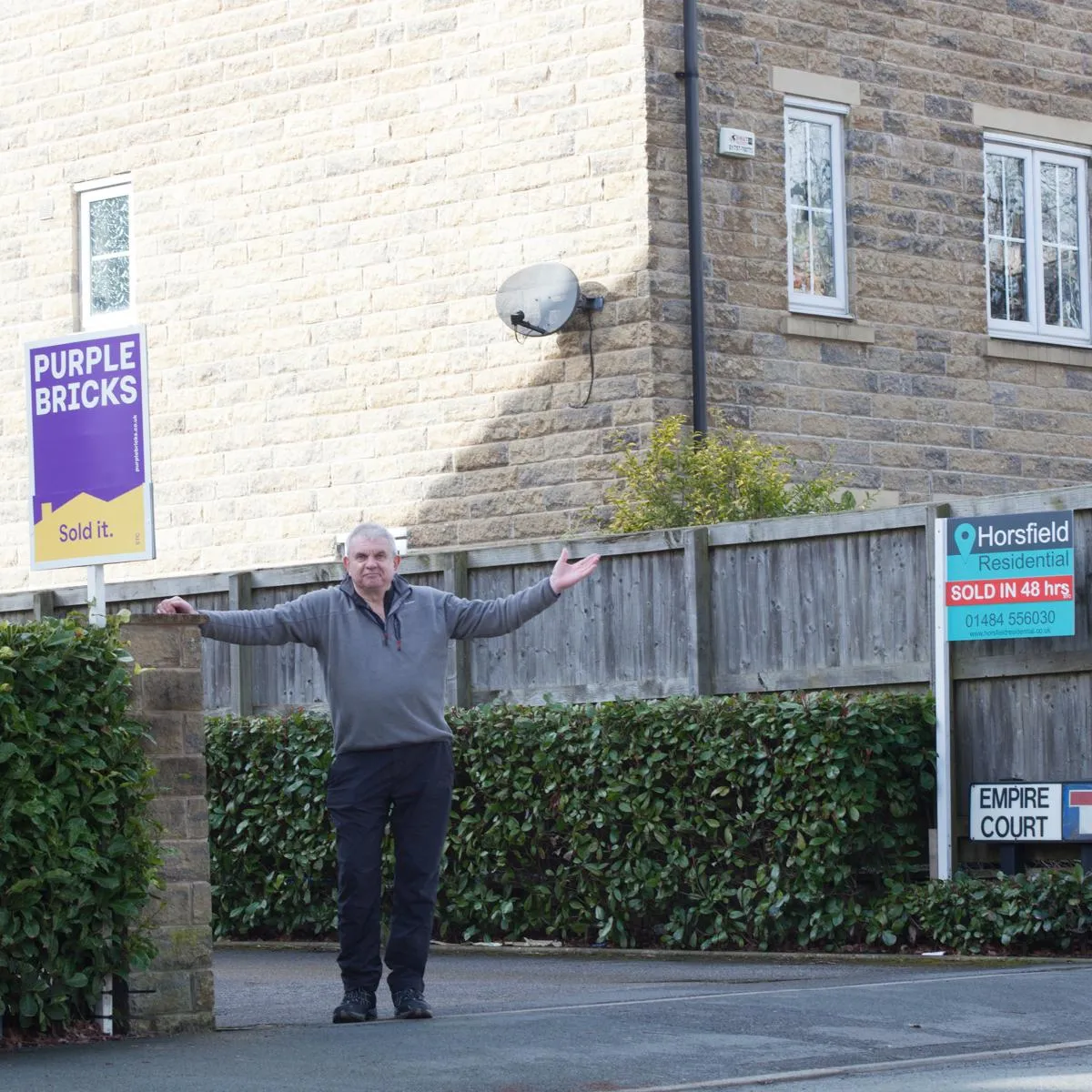
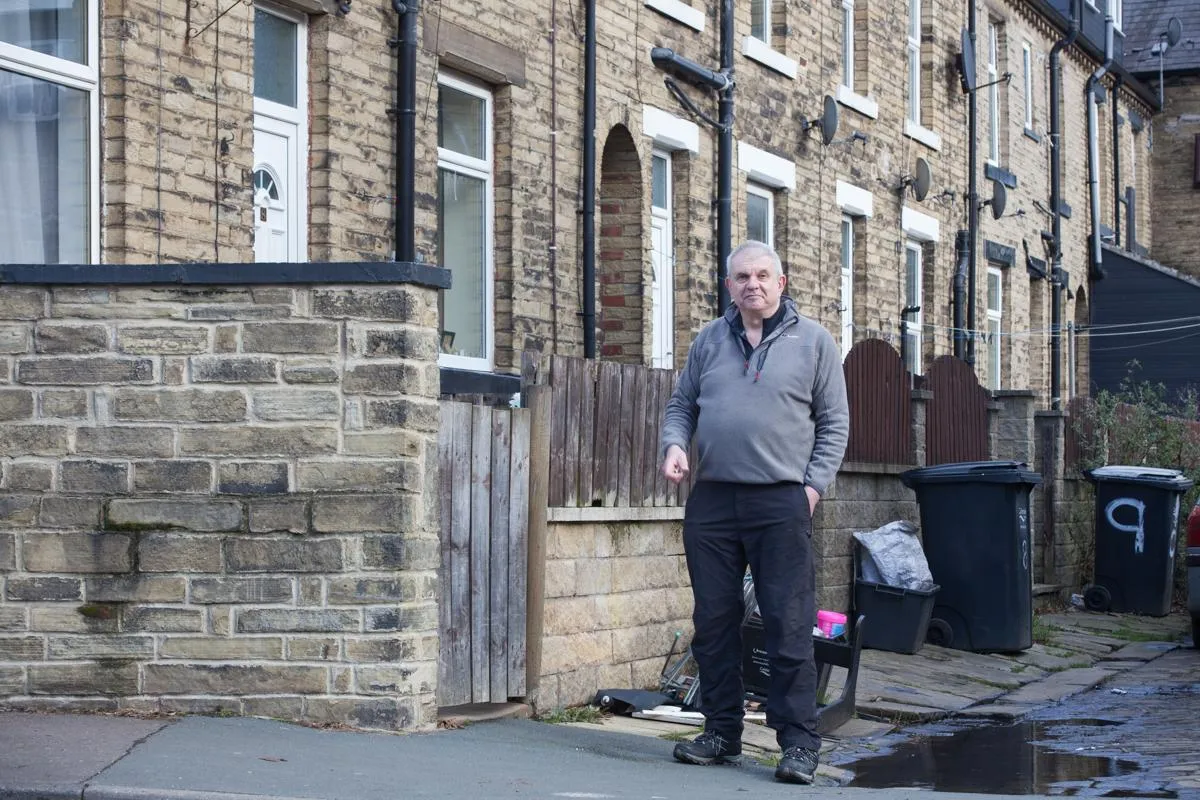
HOUSES OF MULTIPLE OCCUPATION (HMO)
SA is often set up in a similar way to a HMO with multiple bedrooms and shared amenities. The obvious difference is that SAs are let by the night with some let for the weekdays to businesses and then for the weekends to tourists or visitors mostly in larger towns or cities. Generally the whole house or flat is let to one booker so may be to a group of workers, friends or a family. They are similar to what people think of as AirBnB but the owner never lives there.
SERVICED ACCOMODATION (SA)
SA is often set up in a similar way to a HMO with multiple bedrooms and shared amenities. The obvious difference is that SAs are let by the night with some let for the weekdays to businesses and then for the weekends to tourists or visitors mostly in larger towns or cities. Generally the whole house or flat is let to one booker so may be to a group of workers, friends or a family. They are similar to what people think of as AirBnB but the owner never lives there.

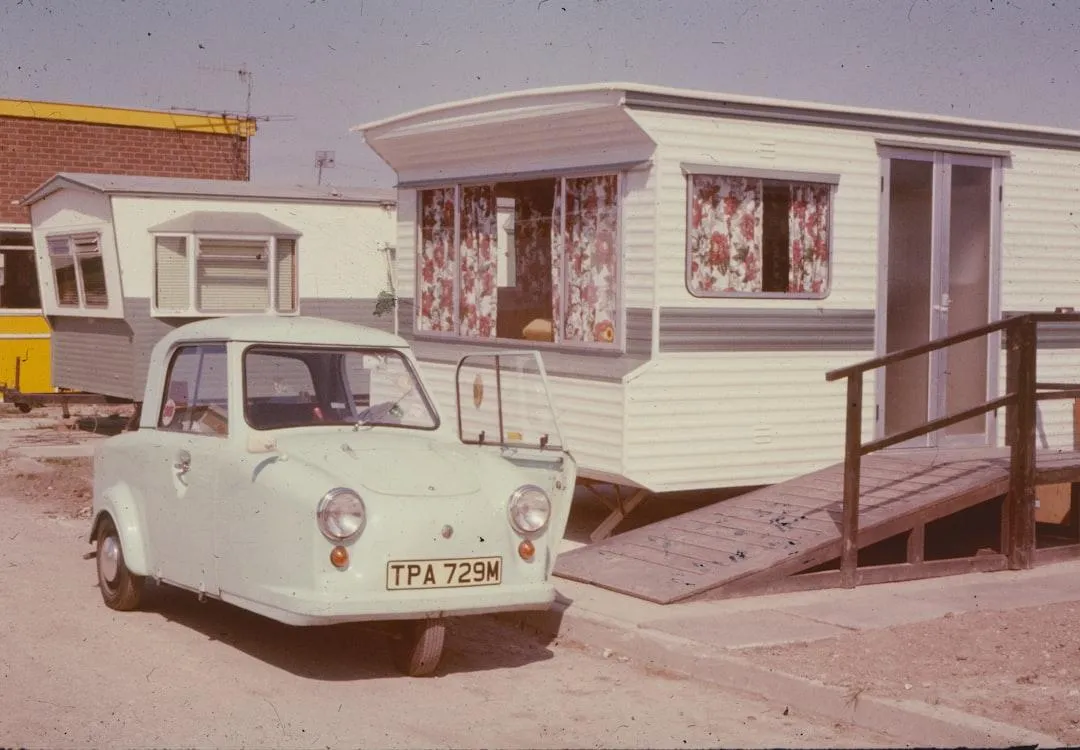
HOLIDAY LETS (HL)
These are lets of a whole house or flat to a person, couple or family for them to use as their home whilst on holiday normally for a weeek or just a few days
OWNED OR RENTED
Investors can choose to rent properties to then use as BTL, HMO, SA or HL but this is normally only done in the case of HMO and SA where the numbers can work out well for both owner and renter. The owner can score a double wammy if he lets to someone using his property for SA or HL as he might be able to claim capital allowances and not have any restriction on mortgage interest.

Why Choose To Work With Cass Properties
Time To Act
Finding time to manage properties hasn't happened by accident. In fact, it's taken a lot of years to get to the point where I have established partners in the industry , so I can focus on the larger plan. This is something I share with the people I work with.
Property Knowledge
I invest in Family Buy-To-Lets & Houses of Multiple Occupation in and around Greater Manchester, the North West, and West Yorkshire. I have the time, money and experience and already work closely with partners who have over 200 properties. I am looking for landlords selling 5+ properties and investors with over £100,000 who would like a great rate of return.
Industry Experience
Knowing the industry inside out, Cass Properties doesn't just talk about how property works; we do it too. We always have active projects, in various stages of the strategy, and welcome other investors who are seeking to build wealth with property.
Comparing Strategies
Strategies Side By Side
Features
Cash Flow
Capital growth
Regulation & Licensing
Difficulty
Management Ease
Management Cost
Capital Allowances Available
Interest restricted to Basic Rate
VAT (when over threshold)
Fallback Option to BTL
BTL
Low
High
Low
Easy
Easy
Cheap
No
Restricted
Never
N/A
HMO
High
High
High
Relatively Easy
Easy
Cheap
No
Restricted
Never
Yes
SA
High
High
High
Moderate
Complex
Expensive
Yes
Not Restricted
Yes
Yes
HL
High / Very High
High
Low
Moderate
Complex
Expensive
Yes
Not Restricted
Yes
Possibly
CONTACT
Call Me Today & Discover How You Can Build Wealth With Property
Reach out now, and either I or one of the team will contact you back promptly


Furnished Holiday Lettings: What do we know now?
Furnished Holiday Lettings: What do we know now?

On 18 August 2024, the government published draft legislation that will abolish the Furnished Holiday Lettings (FHL) regime from April 2025. Previously, it was uncertain whether the abolition, as originally proposed by Jeremy Hunt, would go ahead. In this two-page factsheet, we outline the proposals and identify some potential planning opportunities.
Background
A property qualifies as a Furnished Holiday Let (FHL) if it satisfies certain conditions, including strict criteria for availability and occupancy. The tax treatment for FHLs is more advantageous than for properties that do not qualify. The main tax benefits are:
·FHL properties are not subject to the interest and finance cost restriction that applies to other dwelling properties;
·Capital allowances are available for items installed or used in the property;
·Several capital gains tax (CGT) reliefs are available for those who dispose of an FHL; and
·Income from an FHL qualifies as ‘relevant earnings’ for the purpose of determining a person’s maximum tax efficient pension contributions.
What is changing?
From April 2025, the FHL status will be abolished, meaning properties will no longer qualify for the above tax advantages, meaning:
·Relief for interest on loans and other finance costs relating to the property will no longer be a deductible cost – instead the landlord will be able to claim the Finance Cost Allowance.
·New Capital Allowances claims will no longer be allowed, although prior period Capital Allowances will continue. New claims will be for Replacement of Domestic Items, if the asset is eligible.
·CGT reliefs such as Business Asset Disposal Relief (BADR), rollover relief and gift relief will not be available for properties sold after 5 April 2025; and
·Earnings from the property will not count as qualifying earnings for pension purposes.
In short, income from an FHL will be treated in the same way as any other residential property.
Are there any transitional rules?
Yes. Prior to the draft legislation being published there was concern that the abolition of the regime would mean balancing charges would arise in capital allowances pools in April 2025. However, this will not be the case.
If at the end of the 2024/25 tax year the furnished holiday lettings business has a capital allowances pool of expenditure, writing-down allowances can continue to be claimed on that pool in 2025/26 and onwards. There will not be a market value balancing adjustment as the FHL property becomes part of the main property business.
There was also concern about whether FHL owners would be able to use brought forward losses from an FHL business. The draft legislation confirms that, if at the end of 2024/25 there are carried forward losses in the furnished holiday letting business, these will continue to be carried forward and will be available for set off against future years’ profits of the main property business.
For CGT purposes, where the FHL conditions are satisfied in relation to a business that ceased prior to 6 April 2025, Business Asset Disposal Relief (BADR) may continue to apply to a disposal that occurs within the normal 3-year period following cessation.
How does the anti forestalling rule work?
The ‘anti-forestalling’ rule in the draft legislation relates to CGT reliefs, particularly BADR.
It prevents the opportunity to 'lock-in' the more favourable 2024/25 capital gains tax treatments (including the 10% BADR rate) by entering into a contract on or after 6 March 2024 but before 6 April 2025 and then having an actual date of conveyance or transfer on or after 6 April 2025.
There are exceptions to the rule where the contract was:
·for wholly commercial reasons; or
·made with an unconnected person; and
·in either case no purpose of the contract was to avoid the less favourable capital gains tax treatment applicable to FHL disposals after 5 April 2025.
If the exceptions apply, a statement must be made with the claim to CGT reliefs.
Will the VAT treatment change?
The VAT treatment of holiday lettings is unlikely to change when the FHL regime is abolished. Currently, as per the VAT legislation, ‘holiday accommodation’ is standard-rated. For this purpose, ‘holiday accommodation’ is any accommodation in a building, hut, caravan, houseboat or tent that is advertised as suitable for holiday or leisure use. It is irrelevant whether the property qualifies as an FHL property.
If however, as a result of the changes, the property owner switches to providing living accommodation, the supply will become exempt.
How can you prepare for the changes?
Understanding the implications of the FHL abolition is important. Ask us for a copy of our factsheets on the Finance Cost Restriction, Repairs or Improvements, and Replacement of Domestic Items Relief.
Once you are familiar with how the new rules will work, the next step is to forecast for potential increases in your tax bill.
The timing of expenditure may affect your tax bill. For example, if you are planning a loft conversion to create an extra bedroom, or anything that HMRC would consider to be an enhancement to the property, you may wish to consider accelerating the project to a date before April 2025.
If the expenditure is incurred before 6 April 2025, plant and machinery capital allowances (including the 100% annual investment allowance) may be available on certain components; including upgrades to the central heating system to cover the new room and new furnishings acquired for it.
If the expenditure is incurred on or after 6 April 2025, upgrading the central heating system will be classed as a capital enhancement to the property but with no tax relief given until a later capital disposal. The new furnishings will not be replacements and so no tax relief will be due under the 'replacement of domestic items relief' regime.
If you have not done so already, ascertaining legitimate values of the integral features in the property will add value to the capital allowances special rate pool so that writing down allowances can be claimed (at 6% per annum) after the FHL regime is abolished. This should be done prior to April 2025 - a specialist capital allowances surveyor can help to ascertain the values.
Of course, the abolition of the FHL regime may make you decide to sell your FHL property. If this applies to you, timing is key so that you can maximise any CGT reliefs.
Alternatively, you may wish to consider incorporating your property business. There are pros and cons of doing this and we recommend obtaining specialist advice.
Further information
If you’d like any further information regarding the FHL abolition and how it may affect your personal situation, please speak to us – we will be happy to help.
To read the draft legislation and its accompanying explanations, please see: https://www.gov.uk/government/publications/furnished-holiday-lettings-tax-regime-abolition

TESTIMONIALS

"Clive exceeded ecpectations"
"Investing in property was new to me. I'd always done everything myself and found it stressful. Investing with Clive made everything simple and totally hands-off."
- Lilly, Bolton


"Better ROI than my Lifetime ISA"
"Working with Clive has become a rinse and repeat exercise. The way he does property puts my bank to shame. Property Investing works for me."
- John, Manchester

"Highly recommend this"
"As a mother of 2 I don't have the time to manage property like others do. But I know it's a good investment. Which is why working with Clive makes sense for me and my family."
- Shahida, Lancs
COMPANY
CUSTOMER CARE
45 Highmeadow, Manchester Greater Manchester M26 1YN
FOLLOW US


© Copyright 2026. Cass Properties Ltd. All Rights Reserved. Website & Marketing by TNT Marketing